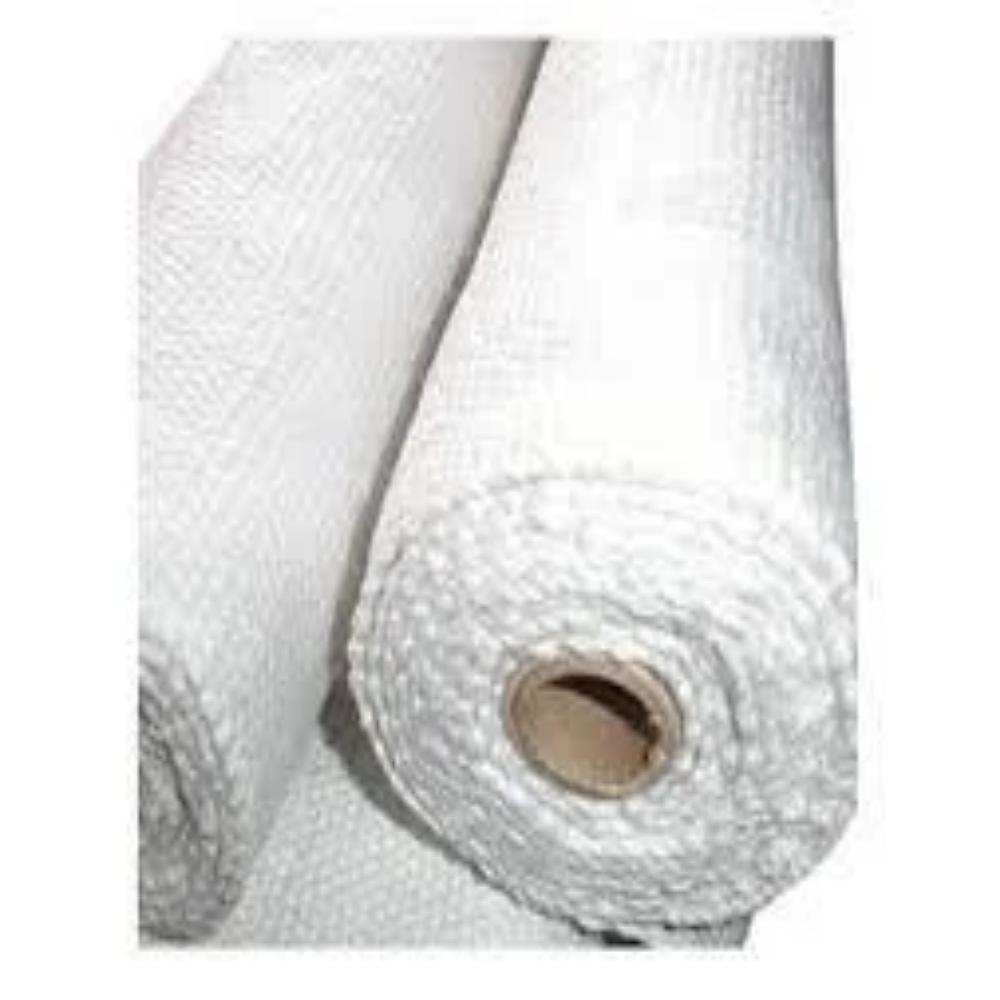
About ASBESTOSH CLOTH
Foundry asbestos cloth typically has the following specifications:
Thickness: Ranges from 1.5 mm to 6 mm and above on request
Width: Standard widths around 1000 mm (1 meter)
Maximum Withstanding Temperature: Can go up to 1260C depending on reinforcement type (e.g., E-glass filament, stainless steel wire, Inconel wire)
Continuous Working Temperature: Varies by reinforcement, e.g. 800C with E-glass filament, 1000C with stainless steel wire, up to 1400C with high temperature laminate
Melting Point: Around 1750C
Material: High tenacity chrysotile asbestos fibers
Available Sizes: Thickness from 1.5 mm to 6 mm and width typically 1 meter; length as per specification
Common Use: Fire-resistant curtains, protective clothing, insulation in foundries, welding curtains, gasketing, flange jointing, radiant heat sheets, high temperature gaskets, and thermal insulation
Additional features include good tensile strength, flexibility, and resistance to thermal shock and chemicals found in foundry environments. Some variants are reinforced with wires (copper, steel) or fibers to enhance durability and heat resistance. The cloth is usually white or natural asbestos color and supplied in rolls for ease of use .
Outstanding Heat and Flame ResistanceAsbestos cloth is renowned for its ability to endure intense heat and flames, withstanding sustained temperatures up to 450C and short-term spikes reaching 1000C. This superb thermal resilience makes it an efficient choice for fire protection, heat insulation, and safeguarding equipment in welding or foundry environments. The cloth's flameproof nature ensures reliable performance under demanding conditions.
Highly Customizable and DurableManufacturers and suppliers in India offer asbestos cloth in a variety of thicknesses (1.5 mm to 5 mm), widths, and roll lengths, catering to diverse industrial needs. The woven structure gives the fabric exceptional tensile strength (>400 N/cm) and long-lasting durability. Surface treatments, such as graphite or vermiculite coatings, are available to further enhance heat and chemical resistance during use.
FAQ's of ASBESTOSH CLOTH:
Q: How is asbestos cloth typically used in industrial settings?
A: Asbestos cloth is commonly employed as a heat and fire-resistant barrier or wrap, used for heat insulation, fire protection, welding blankets, foundry work, and thermal insulation wraps in environments where exposure to extreme temperatures can occur.
Q: What are the main benefits of using asbestos cloth?
A: The primary benefits include outstanding flame resistance, non-combustibility, excellent thermal insulation, high tensile strength, and the ability to withstand short bursts of temperatures up to 1000C, making it reliable for safety-critical applications.
Q: Where should asbestos cloth be stored to maintain its quality?
A: It should be stored in a dry, well-ventilated area, away from direct moisture and physical disturbances, as proper storage ensures its indefinite shelf life and preserves its structural and insulation properties.
Q: What safety precautions are necessary when handling asbestos cloth?
A: Since asbestos fibers are hazardous if inhaled, handlers must use appropriate personal protective equipment (PPE) such as masks and gloves, and ensure proper ventilation or extraction systems in the workspace to avoid health risks.
Q: When might a surface treatment like graphite or vermiculite be chosen?
A: Surface treatments, such as graphite or vermiculite coatings, are applied when additional resistance to heat, abrasion, or chemicals is required, enhancing performance in particularly harsh industrial conditions.
Q: How is asbestos cloth supplied and packaged?
A: The cloth is typically supplied in rolls of 30 meters length and 1 meter width, though customization is possible. Packaging usually consists of plastic or HDPE bags, and can be tailored to specific shipping or storage requirements.
Q: What distinguishes asbestos cloth from other heat-resistant materials?
A: Asbestos cloth's superior flame resistance, high asbestos fiber purity (80%-85%), and structural stability at elevated temperatures make it especially suitable for critical environments where other materials may degrade or lose effectiveness.





 Send Inquiry

